

| The Very Highest Quality Coins... |
| 1996 Pound Coins | |
|
|
|
|
|
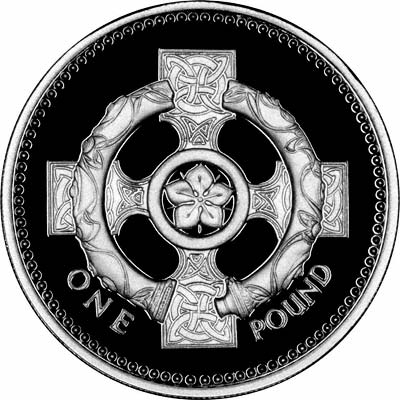
Northern Ireland Celtic Cross Design
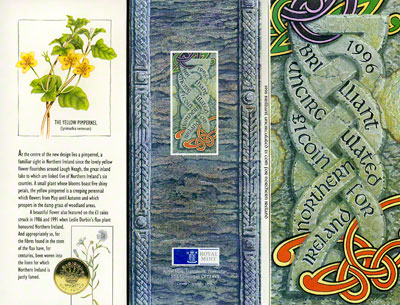
According to the information published by the Royal Mint which accompanies the 1996 proof coin sets:-
More About the Broighter Collar
We are grateful for information we found at "http://www.argonet.co.uk/users/tudor/english/gold.html" a website entitled "Welcome to Limavday and the Roe Valley", by Jochen Lueg, a surprisingly un-Irish name!:-
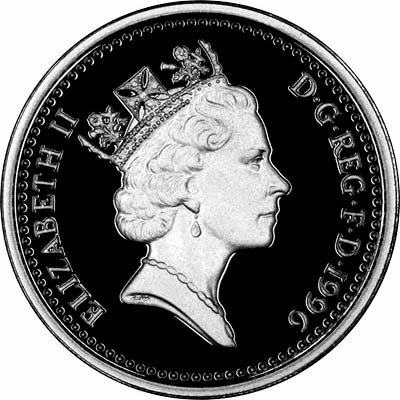
Obverse
The obverse bears the third portrait of The Queen, used from 1985 to 1997, by Raphael David Maklouf.
Reverse
A representation of the Broighter collar over a Celtic cross with a pimpernel at its centre.
The design is the work of engraver Norman Sillman.
Edge
The edge is not only milled but also inscribed. The inscription in Latin reads:-
DECUS ET TUTAMEN
Which may be translated as "an ornament and a safeguard". This inscription dates back to the first machine-struck coins minted in 1662 and was a device to prevent "clipping", and was used on the first pound coin in 1983.
Llantrisant Mint Mark
On the milled edge of the coin is the Llantrisant mint mark - a cross crosslet. The shape of the cross alluding to Llantrisant, which translated from the Welsh means "Church or Parish of the Three Saints".
Technical Specifications
| Version | Diameter | Weight | Metal | Alloy | AMW |
| Uncirculated in Folder | 22.50 | 9.50 | Nickel-brass | ||
| Silver Proof | 22.50 | 9.50 | Silver | 0.925 Silver | 0.2825 |
| Piedfort Silver Proof | 22.50 | 19 | Silver | 0.925 Silver | 0.5650 |
| Version | Issue Limit | Issue Price £ |
| Uncirculated in Folder | £Ask | |
| Silver Proof, Box & Certificate | 25,000 | £Ask |
| Silver Piedfort Proof, Box & Certificate | 10,000 | £Ask |
For Sale
Uncirculated in Folder
| Quantity | Rate | Buy |
| 1 | £8.95 |

|
Silver Proof
| Quantity | Rate | Buy |
| 1 | £25.00 |
|
Piedfort Silver Proof
| Quantity | Rate | Buy |
| 1 | £55.00 | Call to check availability |
Postage & Packing:
UK: At buyer's Risk £3.50 or
Fully Insured £9 (Usually by Royal Mail Special Delivery)
USA: Airmail at buyer's risk $10 or
Fully Insured $20
For further details, please see our Postage & Packing page.
Order Form - UK
Order Form - USA
Order Form - EU
Order Form - Rest of World
Silver Proof Pounds & Silver Piedfort Pounds
1996 Coin Sets
1996 Coins Index
The Broighter Boat features on the design of the Irish Millennium pound coin
If you want to find the value of a coin you own, please take a look at our page I've Found An Old Coin, What's It Worth?
| ...at the Lowest Possible Price |
|
32 - 36 Harrowside, Blackpool, Lancashire, FY4 1RJ, England.
Telephone (44) - (0) 1253 - 343081 ; Fax 408058; E-mail: enquiries@24carat.co.uk The URL for our main page is: https://24carat.co.uk |
Web Design by Snoop |